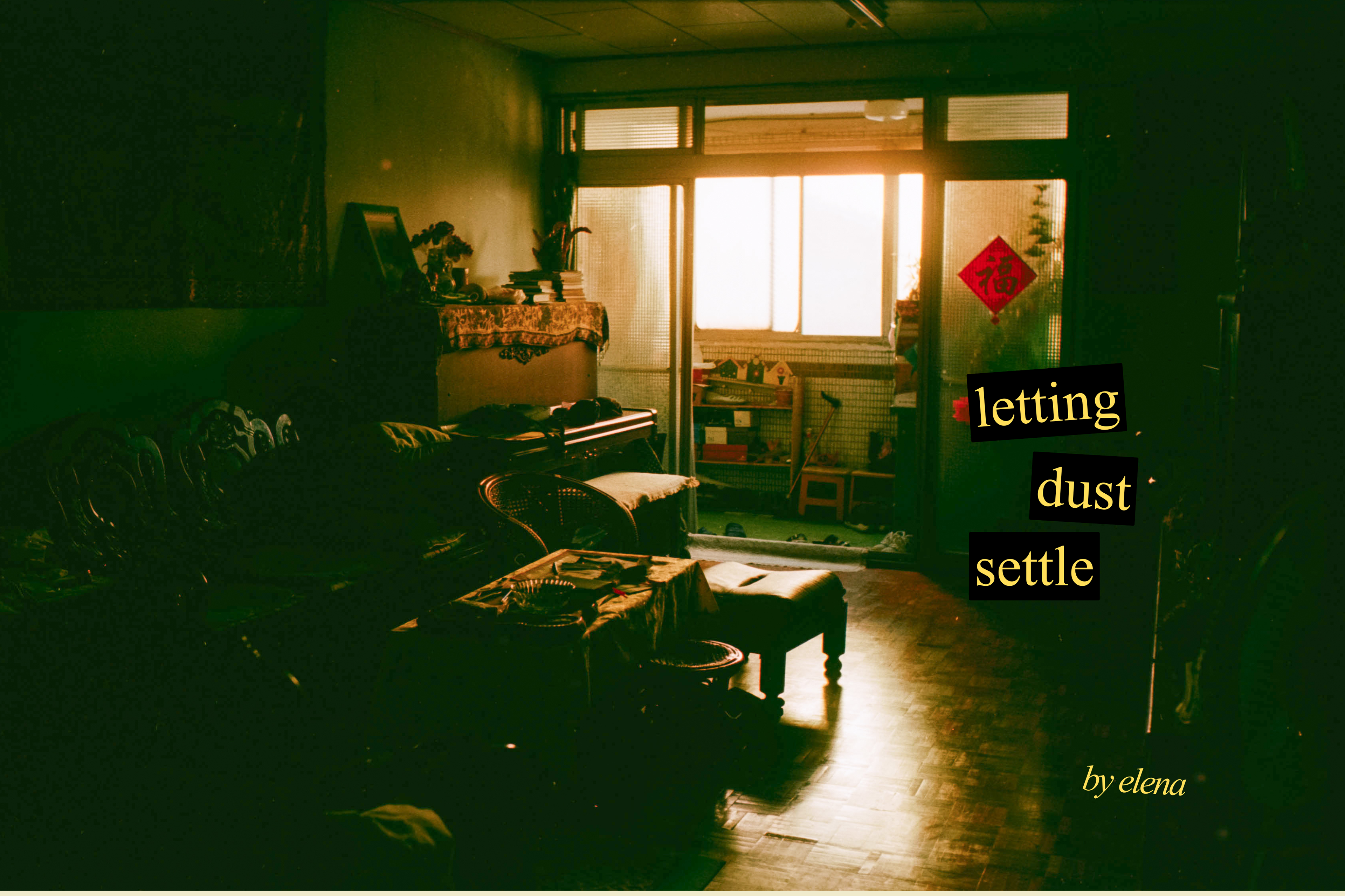
There’s a certain melancholy in going home and seeing a blanket of dust on what was once a source of my generational trauma.
Starting at the age of five, my mother cracked open the upright piano sitting in the living room and plopped me at the bench, teaching me basic scale progressions that stretched my underdeveloped hands. Much to my chagrin, when I turned seven, I was handed an oblong case that contained a hollow box strung with metal strings: I was to learn the violin. In my Asian household, this was less a choice than a certainty— a childhood calibrated by instruments meant to discipline both the mind and the body.
Naturally, I grew up resenting it: not the wooden body or the tear-drenched music scores, but the weight of the expectations that rested on it. Every day, I would be whipped into discipline by a minimum of thirty pages from the yellow book or the white binder. Weeks were no longer separated by the days of the week, “Monday” or “Tuesday”, but known as “piano day” or “violin day”.
When high school rolled around, I found myself stretched thin between all of the activities bidding for my time. I negotiated with my mother: since I was in the orchestra, I would continue practicing my violin if it meant I no longer had to spend hours in front of the piano. She was surprisingly amenable to this new agreement. As a result, I do not remember the last time I touched ivory keys.
Seven years of auditions, morning rehearsals, and Smartmusic (iykyk) dragged by, and on the day of graduation, I closed that chapter of my life. I would never be a violinist anyway; I was never good at it, just good enough to get by.
I didn’t have the talent or love for music to devote a lifetime to it. So when I packed for college, I left behind my violin, along with the skills I spent my childhood fine-tuning (pun-intended). It felt strange, the way a life so familiar can close so easily.
The piano and the violin never spoke to me the way books do– the way nature, photography, and poetry do. So in the months when burnout consumed me, and I saw dust accumulating on the cameras I stored in the cupboard and the books sitting neatly on my bookshelf, I felt a wave of guilt. But more so, fear; fear that, like the piano, the sewing machine, roller skates, and swimming goggles, I would unknowingly leave behind what I loved before realizing it was no longer a part of me.
I let dust settle on the things I once loved. Dust reminds me of the passage of time, a presence that used to mean more than the space it occupies now. But in the twenty-two years I’ve lived, I’ve learned that it’s ok to fall out of love with something. It’s healthy, even. But it isn't good to fall out of love with life itself— with the thirst for its vitality.
I always want to take photos. I always want to read, I always want to write, I always want to be active. For if my love for these were to disappear one day, I would know I am no longer living. It would no longer be me. The lights would be on, but I wouldn’t be home. I would be a shell of a human.
After biking home from the gym one evening last week, I bumped into a neighbor in the elevator. “I saw you biking out there. It’s been thirty years since I last rode my bike!” My mind was preoccupied by the embarrassment of my flushed cheeks and hair swept awry, but I chuckled along. A couple of weeks prior, I saw my childhood bike caked with grime and dust, oxidizing in the garage. That was when I decided that I would return to the thing that once brought me joy.
In the same way, I refuse to let my mind rust from disuse. I have always loved reading and writing, but it’s never the same when you are obligated to do it. Admittedly, years spent poring over required texts that I would not pick up on my own accord, paired with writing essays about topics I could not be less interested in, left me in a state of indifference toward them, let alone the possibility of doing it for pleasure.
So, when I was finally released from the shackles of academia and returned to my childhood bedroom, I visited my bookshelf filled with stories I always wanted to dissect but could never prioritize over the ones assigned in class. A single swipe of my finger along the spines revealed a coat of dust that blanketed my collection. But strangely, I felt gratitude.
In that moment, I realized that witnessing dust implies returning to it. And where my life intersected with the things that I once loved, what would stop me from falling in love again?
It has been ages since I wrote for myself. Admittedly, I have always been inconsistent with journaling; I’d come out of hibernation every couple of months in guilt, updating my future self with what happened in the previous half year. But recently, I have found myself jotting down ideas that emerge throughout the day, and fleshing them out into longer reflections like this one. That is how I fell in love with writing again.
I write to remember my own voice, stifled under the pages of rhetorical précis and theses that I never revisited after racking my brain for hours before a deadline. I don’t have to cite my sources. I don’t have to follow the rules of perfect punctuation. I don’t write for a grader, for an audience; there could be no one reading this, for all I know. I write for me. Maybe that’s what healing feels like.
In the seasons where I get burned out with life, I will let dust settle on things I love and on things I don’t. And I may not always be happy, but I will always be grateful. And gratefulness always brings happiness— so, in a sense, I will always be happy: not as a mood, but as a fullness of heart for all things I once loved, and will love again.